
By: Umar Khan (Candidate Attorney), Ziyaad E Patel Attorneys
Introduction
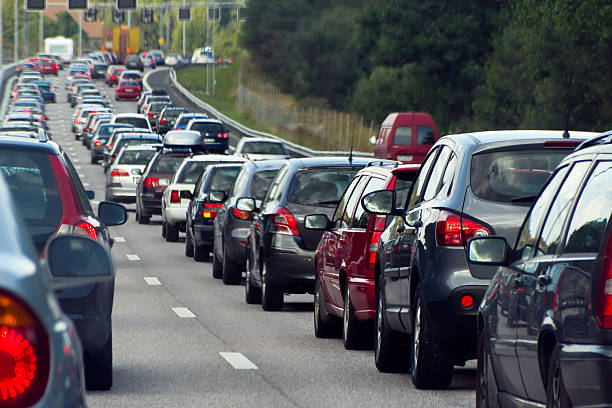
For many South Africans, the festive season is a time associated with rest, travel, and family gatherings. However, this period often brings increased financial pressure, particularly due to holiday expenses and travel costs. The end-of-year period also results in a significant increase in the number of vehicles on South African roads, as millions of motorists travel simultaneously to holiday destinations and family homes.
In response to this heightened traffic activity, South African traffic authorities intensify law enforcement efforts through roadblocks and roadside inspections. These measures are aimed at promoting road safety and reducing the incidence of accidents, particularly during peak travel periods.
Legislative Framework Governing Roadblocks
The authority to establish roadblocks and conduct roadside checks is primarily regulated by the South African Police Service Act. Section 13(8) of the Act empowers the National or Provincial Commissioner to authorise roadblocks for law enforcement purposes.
In practice, two main types of roadblocks are encountered in South Africa. The first is the K78 roadblock, which is specifically authorised to locate, detain, or arrest a particular suspect or suspects. The second is the informal roadblock, which is more commonly used and involves general inspections. These inspections may include checking the roadworthiness of vehicles, verifying drivers’ licences and vehicle documentation, or apprehending motorists who are actively committing offences such as driving under the influence of alcohol or exceeding the speed limit.
The Rights of Motorists at Roadblocks
Being stopped at a roadblock or roadside check can be an intimidating experience. It is therefore important for motorists to be aware of their constitutional and legal rights in these situations.
Firstly, every individual has the right to be treated with dignity, respect, and equality and must not be subjected to discrimination or abusive conduct by law enforcement officials. A motorist is also entitled to request that the law enforcement officer produce a certificate of appointment, which serves as proof of the officer’s authority to perform official duties.
In addition, motorists have the right to record their interaction with law enforcement officers, provided that the recording does not obstruct or interfere with the officer’s ability to carry out their duties. This right is rooted in the constitutional guarantees of freedom of expression and access to information. The Johannesburg High Court confirmed this principle in Jacobs v Minister of Police and Others, where an arrest was found to be unlawful after a motorist attempted to record police conduct at a roadblock.
Arrests and Outstanding Traffic Fines
According to the National Motorists Association of South Africa, a motorist may not be arrested at a roadblock solely for outstanding traffic fines. The Criminal Procedure Act stipulates that only judicial officers are authorised to issue warrants of arrest, and traffic officers do not possess this power.
Roadblocks may provide motorists with the option to pay outstanding fines on the spot or at a later date. However, this option is offered purely as a convenience and does not constitute a legal obligation to make immediate payment.
The Legal Process Leading to a Lawful Arrest
When a motorist contravenes a traffic law, such as exceeding the speed limit, they are typically issued with an Infringement Notice. This notice must be paid within 32 days, and compliance within this period entitles the infringer to a 50% reduction in the fine.
If the fine is not paid within the stipulated timeframe, a Courtesy Letter is issued. This letter requires payment of the full fine, together with an additional administrative fee, and signals the expiry of the discounted amount.
Continued non-compliance results in the issuing of an Enforcement Order, which is sent via registered mail. The Enforcement Order obliges the individual to pay the full penalty, administrative fees, representation costs, and a prescribed enforcement fee within a further 32-day period. Importantly, an Enforcement Order prevents the renewal of the individual’s driver’s licence and vehicle licence disc.
Failure to comply with the Enforcement Order may ultimately lead to court proceedings. A warrant of arrest may only be issued by a judicial officer if the individual has been lawfully summoned to appear in court and fails to do so. Only at this stage may a law enforcement officer lawfully effect an arrest.
Conclusion
While traffic and law enforcement officials are vested with statutory powers to regulate and enforce road safety, these powers are not unlimited. They must be exercised in a manner that respects the constitutional rights of South African motorists.
An arrest at a roadblock cannot lawfully be based solely on outstanding traffic fines. The prescribed legal process, including the issuing of notices and judicial oversight, must be followed.
Only where these processes have been ignored and a valid warrant of arrest has been issued by a court may a law enforcement officer lawfully detain a motorist. Understanding these rights and procedures empowers individuals to engage confidently and lawfully with authorities during roadblocks and roadside checks.